

Project Proposal picnic
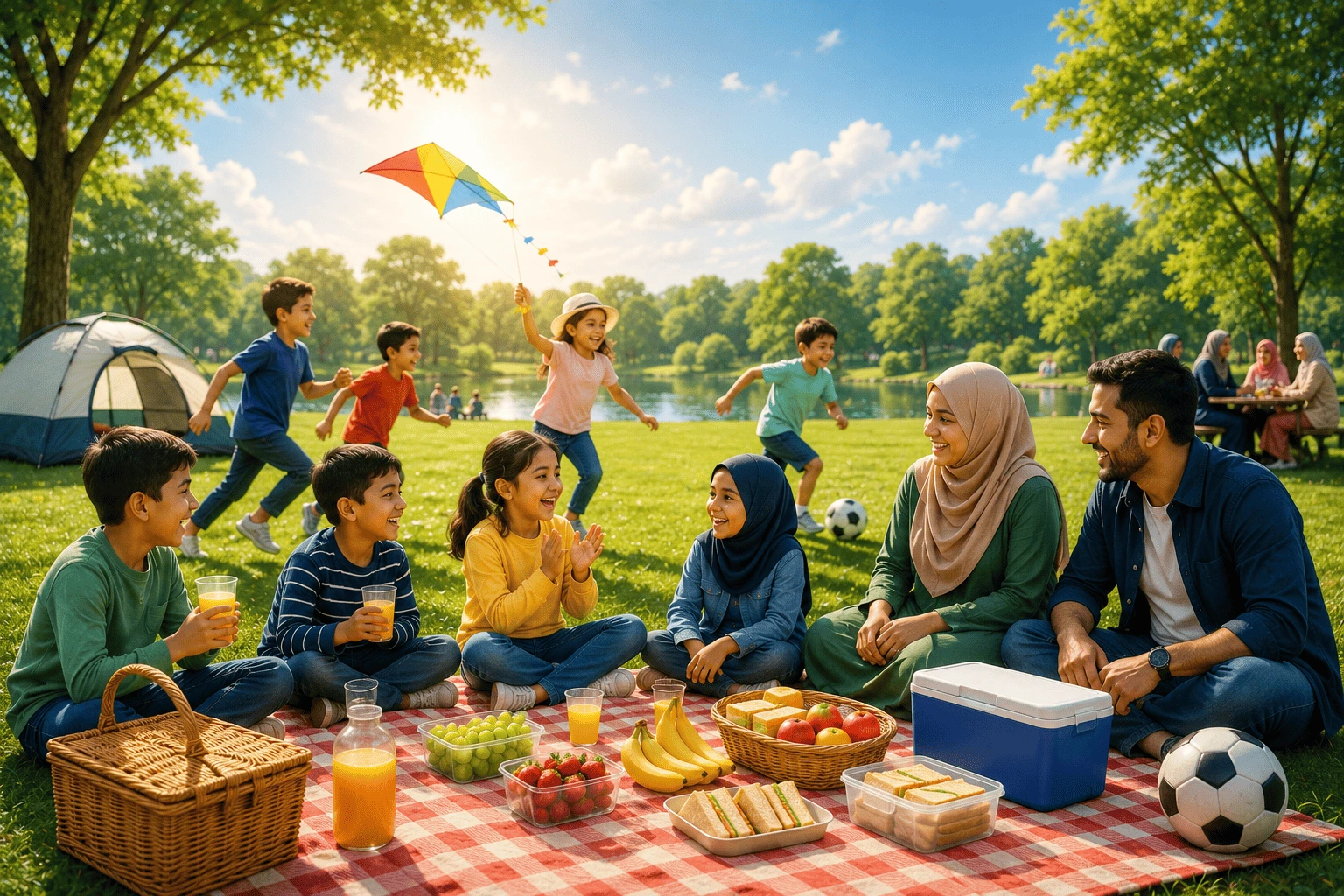
Project Proposal: “Prakriti O Poribar” (Nature and Family)
A Holistic Educational Picnic for Childhood Development (Ages 6–12)
- Executive Summary
This project proposes a structured educational picnic (Bon-bhojon) designed to foster holistic development in children aged 6–12. Unlike a traditional recreational outing, this event utilizes the Japanese “Tokkatsu” (Special Activities) model to integrate non-cognitive skills—such as cooperation, resilience, and gratitude—into a fun outdoor experience. By adapting Japanese pedagogical concepts like Mimamoru (watching and waiting) and Shokuiku (food education) to the Bangladeshi context, the project aims to transform parents from passive observers into active co-learners, addressing local challenges of academic pressure and urban disconnection from nature.
- Rationale & Theoretical Framework
In both Japan and Bangladesh, children face intense academic pressure, often at the expense of physical health and social autonomy. Research indicates that persistent outdoor physical activity is strongly correlated with better self-reported health in children, yet participation declines sharply as they approach adolescence, necessitating structured interventions
To counter this, our proposal adopts three core Japanese frameworks:
- Tokkatsu (Holistic Education): The belief that non-academic activities (cleaning, serving food, working in groups) are essential for character building and developing the “whole child”.
- Shokuiku (Food Education): Understanding food as a web of interdependence between nature, farmers, and consumers, fostering gratitude and sustainability.
- Mimamoru (Teaching by Watching): A parenting strategy where adults intentionally refrain from intervening in children’s struggles to build resilience and social problem-solving skills Akiko Hayashi and Joseph Tobin – The Power of Implicit Teaching Practices_ Continuities and Discontinuities in Pedagogical Approaches of Deaf and Hearing Pre.pdf].
- Operational Structure
- The “Han” System (Group Dynamics)
Participants will not stay in family isolation. They will be divided into mixed “Hans” (Small Groups) of 2–3 families.
- Evidence: The Han system is the fundamental unit of Japanese classrooms, designed to encourage collaboration among diverse students and strengthen group identity.
- The “Toban” System (Rotation of Duties)
Instead of hired staff, participants will manage the event through rotating roles (e.g., Meal Toban, Clean-up Toban).
- Evidence: Rotating duties (Toban) delegates authority to students/participants, teaching the “meaning of labor” and fostering a sense of contribution to the community.
- Activity Chart: Rules & Pedagogical Evidence
| Activity Name | Instructions | Pedagogical Evidence (Source) |
| 1. The “Silent Referee”
(Kabaddi Adaptation) | Parents participate physically but are forbidden from judging rules. If disputes arise, parents must remain silent; only children resolve the call. | This applies the Mimamoru concept. Teachers use “spatial remove” or silence to signal they are unavailable to solve problems, compelling children to handle social conflict themselves Akiko Hayashi and Joseph Tobin – The Power of Implicit Teaching Practices_ Continuities and Discontinuities in Pedagogical Approaches of Deaf and Hearing Pre.pdf]. |
| 2. “Hari Bhanga” Trust Walk | Blindfold the Parent. The child verbally guides them to a target. The parent cannot ask questions and must trust the child’s voice. | Builds a “wet” (emotional) relationship based on shared experience, a key goal of Tokkatsu which values non-cognitive social bonding over “dry” rational instruction. |
| 3. “Nature Alpana” | Groups create art on grass using only fallen items (dead leaves, twigs). No plucking living plants. | Aligns with Shokuiku goals to deepen the understanding that life relies on the “blessings of Nature” and to foster environmental sustainability. |
| 4. The “Interdependence” Lunch | Children serve parents. Everyone waits to eat. The group says “Itadakimasu” (I receive this life). Discuss the farmers/cooks involved. | Shokuiku teaches that eating is an act of interdependence (tomo ikiru) and gratitude. Itadakimasu acknowledges the lives (plants/animals) and labor sacrificed for the meal. |
| 5. The “Silent” Tug-of-War | Parents hold the rope but cannot speak. Children shout commands. If children argue, parents wait 3 mins before speaking. | Valuing the “world of children” (kodomo no sekai). Japanese educators believe children need space to be “childlike” and experience struggle without adult micromanagement Akiko Hayashi and Joseph Tobin – The Power of Implicit Teaching Practices_ Continuities and Discontinuities in Pedagogical Approaches of Deaf and Hearing Pre.pdf]. |
| 6. The “Big Jump”
(Group Rope Skipping) | Entire Han jumps a long rope. Score counts only if everyone clears it simultaneously. | Emphasizes Tokkatsu principles of “learning by doing together,” where the process of synchronizing as a group is more important than individual result. |
| 7. “Zero Waste” Line Search | Participants line up shoulder-to-shoulder and walk across the site, picking up every piece of micro-trash. | Souji (Cleaning) is not a chore but a way to cultivate “public spirit” and responsibility for the shared environment. |
- Proposed Schedule
- 09:00 – Morning Meeting (Chokai): Explanation of the day’s “Mission” and forming of Han groups.
- 09:30 – Trust Activity: “Hari Bhanga” Trust Walk.
- 10:30 – Physical Challenge: “Silent Referee” Kabaddi or Tug-of-War.
- 12:00 – Educational Lunch (Shokuiku):
- Hand washing and setup by Meal Toban.
- “Interdependence” discussion (Origins of the rice/vegetables).
- Itadakimasu ritual.
- 13:30 – Nature Connection: “Nature Alpana” art project.
- 14:30 – Cleaning (Souji): “Zero Waste” Line Search.
- 15:00 – Reflection (Hansei-kai):
- Participants sit in a circle.
- Question: “What is one thing your Han partner did that helped you today?”
- Evidence: An event is incomplete without Hansei (reflection), which helps solidify the social lessons and encourages metacognition.
- Expected Impact
- For Children: Improved social autonomy and a deeper connection to nature, countering the sedentary lifestyle often seen in urbanized education systems Liu, J._ Sekine, M._ Tatsuse, T._ Fujimura, Y._ Hamanishi, S._ L – Outdoor physical activity and its relation with self-reported health in Japanese.pdf].
- For Parents: Acquisition of the Mimamoru parenting skill—learning to step back and trust the child’s resilience Akiko Hayashi and Joseph Tobin – The Power of Implicit Teaching Practices_ Continuities and Discontinuities in Pedagogical Approaches of Deaf and Hearing Pre.pdf].
- For Community: A shift from viewing school involvement as merely “monitoring homework” to active participation in holistic development Heidi Knipprath – The Role of Parents and Community in the Education of the Japanese Child (2004)
- Support for Tokkatsu and Group Structure (Tsuneyoshi)
Status: Strongly Supported The proposal’s use of mixed groups (Han) and rotating duties (Toban) is directly lifted from the standard Japanese model described by Tsuneyoshi.
- Supporting Evidence:
- School Events as Education: The text confirms that school events (like excursions/picnics) are not just fun but are officially classified under Tokkatsu to “strengthen the feeling of being part of a group” and “develop a sense of public responsibility”.
- The Han System: The proposal’s “Mixed Han” activity aligns with the text, which states Han groups are used to ensure students “learn how to work together with different people” and are often heterogeneous.
- The Toban System: The proposal’s “Meal Toban” and “Cleanup Toban” align with the text’s description of rotating tasks to encourage cooperation and “delegates authority to students”.
- Holistic Goal: The proposal’s aim to balance “heart, mind, and body” aligns with the curriculum goal of Zest for Living (ikiru chikara).
- Conflicting/Nuanced Ideas:
- Teacher vs. Parent Role: The text describes Tokkatsu as “a creation of teachers” who facilitate the process. The proposal shifts this facilitation role partly to parents. The text implies that Tokkatsu requires professional structuring to avoid becoming “authoritarian”, suggesting that without trained teacher guidance, parents might struggle to manage Han dynamics democratically.
- Support for Shokuiku and Food Activities (Rappleye et al.)
Status: Strongly Supported The “Interdependence Lunch” and “Nature Alpana” activities are well-grounded in the philosophy of Shokuiku described here.
- Supporting Evidence:
- Gratitude Rituals: The proposal’s use of Itadakimasu is supported by the text, which explains the phrase means “I humbly receive” and acknowledges the “interdependent network” of plants, animals, and farmers.
- Serving Lunch: The activity of children serving parents mirrors the text’s description of students serving each other to cultivate “positive sociability”.
- Nature Connection: The proposal’s focus on nature aligns with the Basic Law on Shokuiku (2005), which mandates deepening the sense that “diet is based on what Nature bestows”.
- Interdependence (Tomo Ikiru): The text explicitly links eating together to “learning to live together” (tomo ikiru), validating the proposal’s goal of social bonding through food.
- Conflicting/Nuanced Ideas:
- Nutritional Focus: The 2009 revision of the School Lunch Act added a strong emphasis on nutrition and “desirable dietary habits”. While the proposal focuses on gratitude, the text suggests a modern Shokuiku program should also explicitly teach nutritional balance (e.g., food groups), which is currently a minor part of your proposal.
- Support for Mimamoru and Non-Intervention (Hayashi & Tobin)
Status: Supported with a Major Caveat The “Silent Referee” and “Silent Tug-of-War” games are excellent applications of the concept, but the text warns that this is highly difficult for parents.
- Supporting Evidence:
- Definition: The text validates Mimamoru as “teaching by watching and waiting,” a core Japanese pedagogical strategy.
- Rationale: The proposal’s goal of building resilience is supported by the text, which argues that intervening too quickly deprives children of the chance to “experience emotions and deal with interpersonal conflicts”.
- The “Spatial Remove”: The proposal’s instruction for parents to “stand back” mirrors the teacher Ikeda-sensei’s strategy of physically turning away to signal she is not available to intervene.
- Conflicting/Nuanced Ideas:
- The “Parental Barrier”: This is the strongest conflict in your project. The text explicitly states: “Watching and waiting (mimamoru) is very difficult for parents. If most parents were at school and they saw their children in a fight like this, they couldn’t stand it. They’d have to do something”.
- Implication: Your proposal assumes parents can do this. The literature suggests they naturally cannot. You may need to add a “Training Session” or “Parent Briefing” to the schedule to explicitly teach them how to resist the urge to intervene.
- Support for Outdoor Activity and Health (Liu et al.)
Status: Strongly Supported The rationale for the picnic—combating sedentary lifestyles and academic pressure—is backed by hard data in this text.
- Supporting Evidence:
- Health Correlation: The text confirms that “persisting in liking and doing outdoor physical activity” is associated with better self-reported health.
- Decline with Age: The text supports targeting the 6–12 age range, noting that preference for outdoor activity drops significantly as children age (from 93.9% at age 6 to 75.7% at age 12 for girls).
- The Juku Barrier: The text validates the proposal’s context of academic pressure, noting that Japanese children spend significant time in cram schools (juku), reducing time for play.
- Support for Parental Role (Knipprath)
Status: Mixed / Transformational The proposal seeks to make parents “active co-learners.” Knipprath’s text shows this is a goal of recent reforms but contradicts the traditional reality of Japanese parents.
- Supporting Evidence:
- Reform Goals: The text notes that since the late 1980s, reforms have pushed for “open schools” and “partnership” (renkei) between parents and schools to foster a “zest for living”.
- Participation Days: The text cites successful examples where passive “observation days” were turned into “participation days” where parents helped teach, which aligns with your interactive picnic model.
- Conflicting/Nuanced Ideas:
- Traditional Passivity: Historically, Japanese parents’ role is “one of support” (checking homework, providing desks) rather than active participation in school activities. The text notes that “involvement of Japanese parents in their schools is strictly limited”.
- Implication: Parents may be culturally conditioned to “watch” rather than “join.” Your proposal requires breaking this habit. The text warns that such reforms often face a “mismatch of rhetoric and political practice”, meaning parents might agree to participate but revert to passive observation if not actively engaged.
Seminar Title Proposal: “Beyond the Classroom: Holistic Development in a Changing World”
Topic 1: Nutrition and Hygiene as Education (Not Just Health)
Concept: Shokuiku (Food Education) & Tokkatsu
Goal: To shift the audience’s view of lunch and cleaning from “chores” to “learning opportunities.”
- Key Talking Points:
- Food is Interdependence: Discuss how eating is not just about calories but about recognizing the “network of people” (farmers, cooks) and the “blessings of nature” required to sustain life.
- The “Itadakimasu” Mindset: Explain the importance of gratitude rituals before meals to cultivate a humble respect for the environment.
- Hygiene as Public Responsibility: Use the Tokkatsu concept to explain that hygiene (like cleaning the classroom or washing hands before lunch) is a “Special Activity” designed to develop a “sense of public responsibility” and a “practice-oriented attitude”.
- Evidence to Present:
- Present the “School Lunch Act” goals (2009 Revision) which mandate cultivating a spirit that “respects life and nature”.
Topic 2: Redefining Parental Involvement (From Observers to Partners)
Concept: Renkei (Collaboration) & Participatory Parenting Goal: To encourage parents to move beyond checking homework and into active participation.
- Key Talking Points:
- The “Support” Trap: Discuss how parents traditionally view their role only as “home support” (buying desks, checking homework) rather than active partners in school life.
- The “Participation Day” Model: Propose shifting from passive “Observation Days” (Jugyo Sankan) where parents just watch, to “Participation Days” (Gakushu Sanka) where parents actually assist and learn alongside children.
- Shared Labor: Highlight that shared activities (like the picnic or cleaning together) build stronger community bonds than just attending meetings.
Topic 3: The Barriers to Involvement (Why It’s Hard)
Concept: Mimamoru (Watching and Waiting) & Professional Boundaries Goal: To address the emotional and structural difficulties parents face.
- Key Talking Points:
- The Emotional Barrier (Mimamoru): Explain that “watching and waiting” is extremely difficult for parents. Citing the research, explain that “if most parents… saw their children in a fight… they couldn’t stand it”. Parents naturally want to intervene, but this stunts the child’s resilience.
- The “Expert” Barrier: Discuss the cultural barrier where teachers are seen as “experts” and parents as “laymen,” which often discourages parents from stepping up or voicing opinions in school governance.
- The “Busyness” Trap: Acknowledge that the “busyness” of modern parenting often leads to high-intervention parenting (like the “education mom”), which conflicts with the need for children to have autonomy.
Topic 4: The Digital Landscape vs. Holistic Development
Concept: Somatic Symbiosis (Body-Nature Connection) vs. Sedentary Life Goal: To critique the disconnect from nature caused by modern/digital lifestyles.
- Key Talking Points:
- The Decline of Outdoor Activity: Present data showing that as children age (from 6 to 12), their preference for outdoor activity drops significantly (from ~94% to ~75%), which correlates with poorer health.
- The “Somatic” Disconnect: Discuss how modern education (and digital life) focuses too much on “cognition” and “symbols,” ignoring the “somatic” (bodily) relationship with the world.
- Restoring the Connection: Argue that holistic development requires a “return of the educated subject to Nature” to balance the digital/symbolic world with physical reality.
Topic 5: The Art of Reflection (Hansei) – Learning from Experience
Concept: Hansei (Self-Reflection) Goal: To teach parents that an activity is not finished until the child reflects on it.
- Key Talking Points:
- The Learning Cycle: Explain that in Japan, no event (picnic, cleaning, game) is complete without Hansei-kai (reflection meeting). Doing the activity is only half the learning; thinking about it is the other half.
- Metacognition: Discuss how asking children “What went right?” and “What could we do better next time?” builds critical thinking skills that academic study alone cannot provide.
- Group Growth: Explain that reflection isn’t just about the individual; it’s about how the group functioned.
- Evidence to Present:
- Cite Tsuneyoshi’s research on School Events, which emphasizes that these activities are designed to “strengthen the feeling of being part of a group” through collective goal-setting and reviewing.
Topic 6: Valuing “Childlikeness” (Kodomo Rashii)
Concept: Kodomo no Sekai (The World of Children) Goal: To reassure parents that conflict, noise, and mess are essential for development, not behaviors to be suppressed.
- Key Talking Points:
- Conflict is Healthy: Use the “tug-of-war” example to show that when children argue, they are negotiating social rules. If adults silence them immediately to “be polite,” children never learn conflict resolution.
- The “Good Child” Trap: Discuss the pressure for children to act like “mini-adults.” In contrast, the Japanese approach values being Kodomo Rashii (childlike)—allowing them to be physical, loud, and emotional to build a robust “self” before adhering to strict societal rules.
- Trusting the Child: Encouraging parents to trust that children have their own “social rules” that work if adults step back.
- Evidence to Present:
- Cite Hayashi & Tobin’s findings that experienced educators allow children to fight because it represents the authentic “world of children”, whereas constant intervention strips them of agency Akiko Hayashi and Joseph Tobin – The Power of Implicit Teaching Practices_ Continuities and Discontinuities in Pedagogical Approaches of Deaf and Hearing Pre.pdf].
Topic 7: The “Hidden Curriculum” of Daily Routines
Concept: Toban (Rotating Duties) & The Hidden Curriculum Goal: To show how household chores can replace lectures on responsibility.
- Key Talking Points:
- Routine as Teacher: Explain that character isn’t taught through textbooks but through the “Hidden Curriculum” of daily life (e.g., serving food, cleaning up).
- Rotation (Fairness): Propose the Toban system for the home. Instead of “Mom always cooks,” assign a “Rice Toban” or “Table Toban” that rotates weekly. This teaches that everyone is responsible for the family’s well-being, not just the parents.
- Meaning of Labor: Discuss how menial tasks (cleaning, serving) cultivate humility and public spirit.
- Evidence to Present:
- Use the visual of the “Toban Roulette” from Tsuneyoshi’s paper to demonstrate how schools operationalize fairness and shared duty.
Topic 8: The Gender Gap in Physical Health
Concept: Health Action Process & Adolescent Decline Goal: To alert parents to the specific risk of girls dropping out of physical activity as they approach puberty.
- Key Talking Points:
- The “Age 12” Cliff: Present the data showing that while 94% of girls like outdoor activity at age 6, this drops to 75% by age 12, and their actual participation drops even lower (only ~46% meet recommendations).
- Intent vs. Action: Explain that children often like activity but don’t do it due to academic pressure (Juku) or lack of opportunity. Parents need to actively protect time for girls to play outdoors.
- Lifelong Health: Highlight that physical habits formed now (ages 6–12) predict adult health. Stopping now risks long-term sedentary lifestyle issues.
- Evidence to Present:
- Cite the longitudinal data from the Toyama Birth Cohort Study, which explicitly identifies the decline in girls’ participation as a “public health priority” Liu, J._ Sekine, M._ Tatsuse, T._ Fujimura, Y._ Hamanishi, S._ L – Outdoor physical activity and its relation with self-reported health in Japanese.pdf].